I am thankful for this week of rest, giving me many opportunities for quiet contemplation.
********************
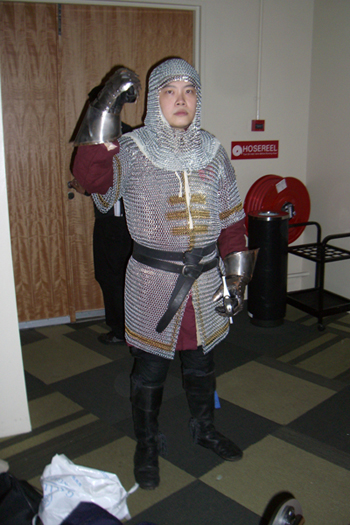
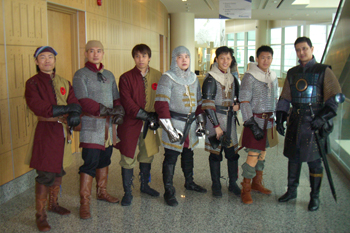
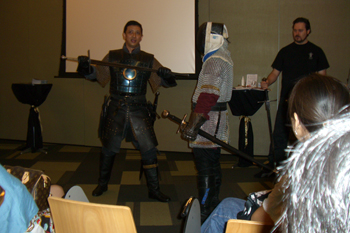
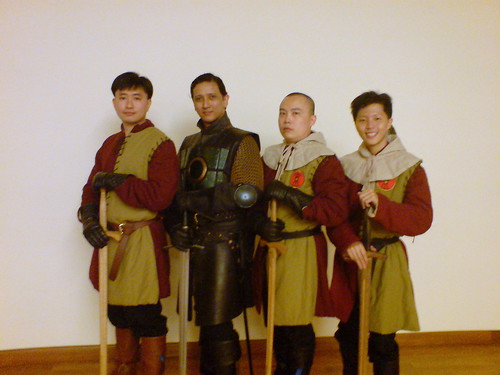
I've been thinking about my newfound insights into Fiore.
Tome and
Ken have their own insights about the seminar - I will not repeat them here, but I agree with them. I will add that I am thinking more about their perspectives as well as my own.
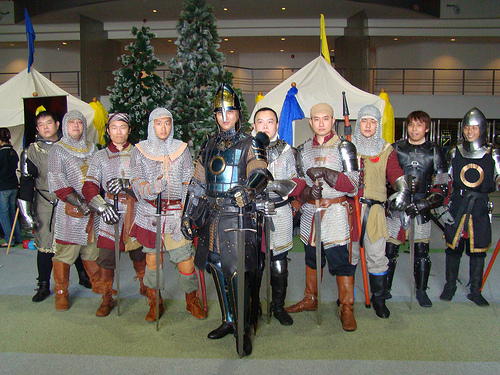
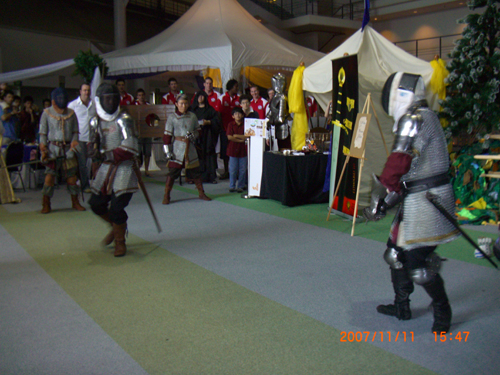
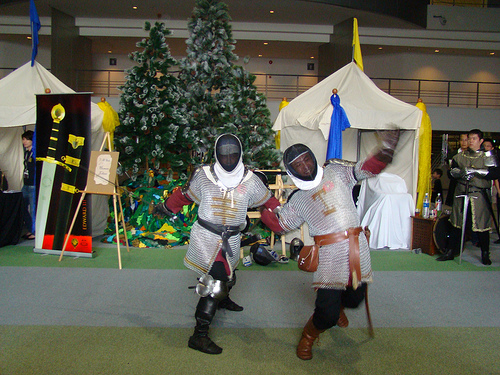
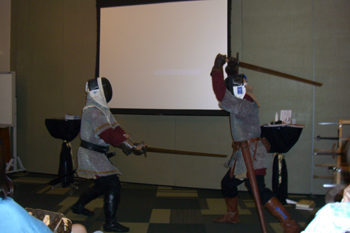
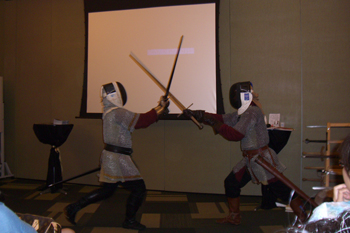
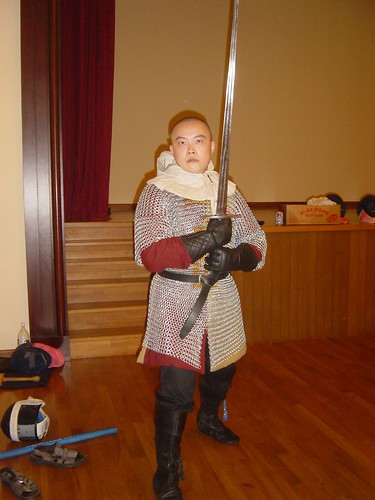
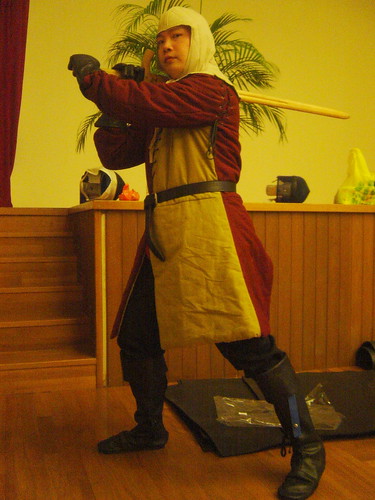
Fiore (the swordmaster whose work we are studying) talks about "Sentimento de Ferro" or the "Feeling of Steel". When a sword contacts another sword, there is a feeling, a pressure acting against the sword you wield. Often, this feeling guides you on what to do next. An attempted bind on a sword, for example, feels very different from an attempted beat, and the counters are different. True, your sight and knowledge of attack lines will guide you, but too often, we neglect to hear the voice of our own sword telling us what needs to be done.
At the risk of sounding sentimental, I will add one extra dimension to it - true, the sword has a voice telling us what to do, but as swordsmen, we must also learn to listen. Too often, I have scripted plans of attack and defense in my head based on what I -think- the opponent is going to do. VERY often, these scripts fail and leave me in a world of pain. Only when I stop scripting, and start feeling, do I get a sense of what needs to be done, and do it.
In short, I am learning to listen, and not voice.
********************
How human a failing is that - to superimpose our own voices over the voice that already tells us what we need to know.
Quite by accident, I stumbled across the Wikipedia entry to "
Man of La Mancha". This is essentially a musical adaptation of Cervantes' "
Don Quixote", a washed-out fifty year old who has read one too many novels on chivalry and believes himself a great knight. I believe the opening act is familiar to all - Don Quixote charges at a windmill, believing it a four-armed giant and promptly collides into it.
The power of the Don Quixote myth, however, is
exactly his delusion. Failing to defeat the four-armed giant, he goes on quest after quest to ensure that he is not defeated again. In the course of the story, he is confronted by a doctor who attempts to cure him and succeed - by showing him in a mirror exactly how the world sees him, a washed-out old man. The climax is where a barmaid, wooed by Don Quixote and treated as a lady, begs Don Quixote to return to his delusions, because she cannot stand being a barmaid.
Too often, we make the achievement of a dream the paramount concern. We build scripts and plans over these dreams. Too often, we think that by our hand we will achieve these dreams.
Too often we charge at windmills thinking they are four-armed giants. Too often, after we collide, we see ourselves as we truly are - washed-out fifty year old men, and then crawl off somewhere to die with dignity.
What happens to that voice then?
Cervantes already has the answer - Don Quixote awakens at the climax back to his delusions and remembers his barmaid, who he has always mistakenly called Dulcinea, fights off men he thinks are threatening her, and dies of the fever he has developed. The barmaid henceforth refuses to be addressed by any other name.
The importance of the Don Quixote legend that he's always listened to the voice in his heart, and in doing so, paves the way for others to hear the voices in their hearts.
********************
Like "Sentimento de Ferro", it takes a lifetime to learn to hear the voice. More accurately, it takes a lifetime to
unlearn the hearing of other people's voices, and do what you've always known to be right.
Like Don Quixote, the important fact is not achieving the dream, but having the dream, and when that dream fails, having another one.
To every man his Dulcinea.